Medical Carts Explained: How to Pick the Right Hospital Trolley (Without Running Over Anyone's Toes)
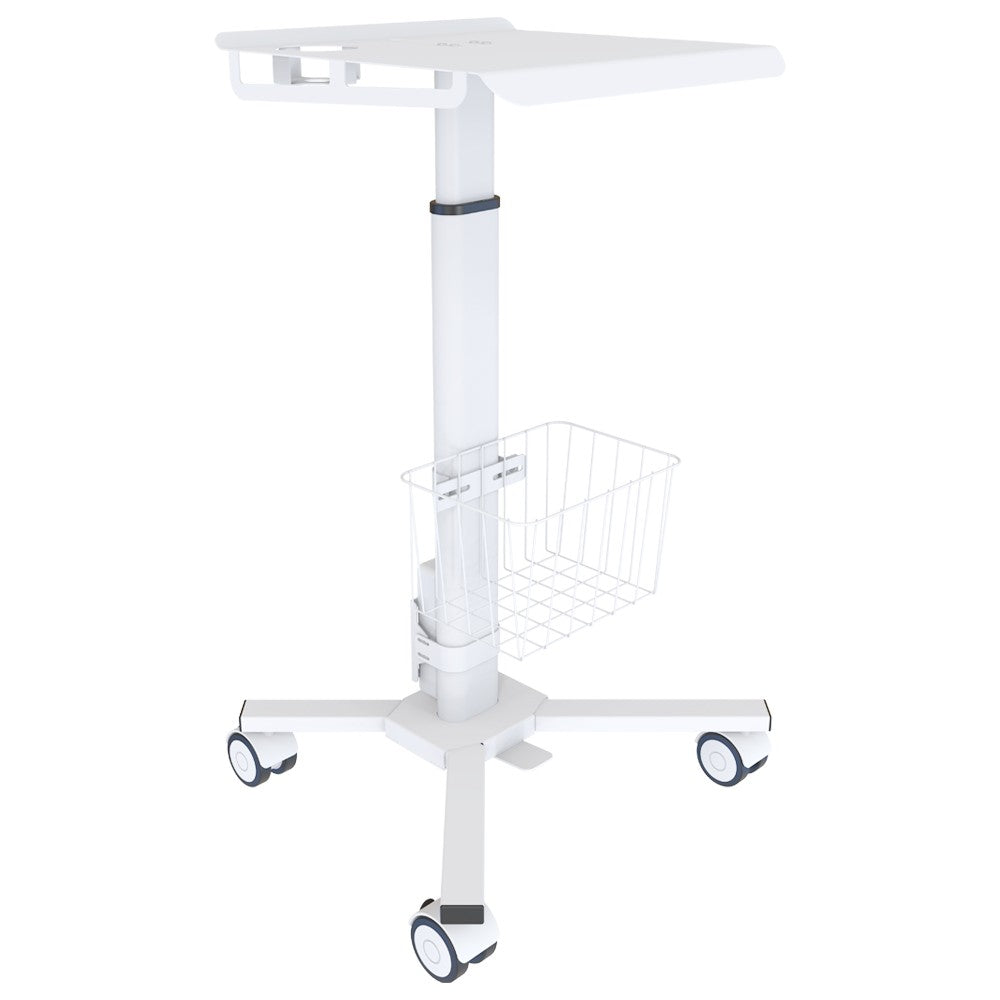
Quick answer: the right medical cart depends on what it carries and how often it moves. For ward rounds, choose a light laptop cart with a gas-lift column. For ECG or ultrasound machines, choose a stable multi-tray trolley with a wide base. For dental intraoral scanners, choose a cart with a dedicated scanner holder. Always check height range, castor quality, VESA pattern and cable management before you buy.
Nobody goes into healthcare because they love trolleys. But ask any nurse halfway through a twelve-hour shift and they'll tell you: a wobbly cart with a sticky wheel can ruin a ward round faster than a broken coffee machine. A good one simply disappears into the workflow – which is exactly the point.
Here's our no-nonsense guide to picking the right medical cart for your clinic, ward or surgery.
What is a medical cart?
A medical cart (also called a hospital trolley, medical workstation or point-of-care cart) is a mobile stand that carries a laptop, monitor, diagnostic device or supplies to wherever the patient is. Instead of patients coming to the computer, the computer goes to the patient – saving steps, time and a fair amount of shoe leather.
The 5 things that actually matter
1. Height adjustment (your back will thank you)
Clinicians switch between sitting and standing constantly. A gas-lift column lets you move the work surface up or down with one hand. Our TMO-MED-002 mobile workstation cart goes one better with a foot pedal, so your hands stay free (and clean).
If you'd rather press a button than push a lever, a motorised option like the remote-control height-adjustable workstation cart does the lifting for you.
2. The base: four legs or five?
Think of it like office chairs. A five-castor star base is the steadiest choice for heavier kit and busy corridors – it's why the TMO-MED-013 star-base cart is popular in wards and outpatient clinics. Four-castor X or V bases are lighter and slip more easily through tight bays.

3. What's riding on top?
- Laptops and EPR: an angled, anti-slip laptop tray stops the machine sliding off when you take a corner a bit too enthusiastically. See the TMO-MED-018 laptop cart with side trays.
- Monitors: look for a VESA mount (usually 75×75 or 100×100) so a screen bolts on securely.
- ECG and ultrasound machines: you need multiple trays and room for leads. The PM-X1 multifunctional medical trolley is built for exactly this.

4. Power and cable management
Three devices, three plugs, one tangle. A cart with a built-in power-strip holder keeps leads tidy and off the floor – a real trip-hazard reducer. The TMO-MED-024 equipment trolley was designed around this very headache.
5. Flexibility for tomorrow's workflow
Departments change. Kit gets upgraded. A modular cart means you buy one chassis and reconfigure it – tray only, monitor only, or both. That's the thinking behind the TMO-MED-030 modular medical cart.
Which cart for which job?
| Setting | What to look for | Good fit |
|---|---|---|
| Nursing ward rounds | Baskets, monitor arm, sharps box space | Nursing rounds cart |
| ECG / ultrasound / infusion | Multiple trays, stable base, infusion holder | PM-X1A hospital cart |
| Dental intraoral scanning | Scanner holder, monitor mount, laptop tray | TMO-MED-017 scanner cart |
| Bedside documentation | Compact footprint, angled laptop tray | TMO-MED-018 laptop cart |
| Fixed bay or theatre | Ceiling mount to free up floor space | PM-501D ceiling monitor mount |
Don't need wheels at all?
Sometimes the best cart is no cart. In bays where the screen never moves, a ceiling or wall mount keeps the floor clear for cleaning and patient access. Browse our ceiling-mounted monitor arms and gas-spring medical wall mounts.
Frequently asked questions
What is the difference between a medical cart and a hospital trolley?
Mostly the name. "Medical cart" usually means a mobile computer or device workstation, while "hospital trolley" can also cover supply and equipment trolleys. Both are designed to bring equipment to the patient.
How much weight can a medical cart hold?
It varies by model – always check the product's maximum load for both the tray and the monitor mount, and keep heavier items low to stay stable.
Are gas-lift medical carts easy to adjust?
Yes. A gas-spring column lets you raise or lower the work surface with one hand or a foot pedal, which makes switching between sitting and standing quick.
Do you supply medical carts in bulk for NHS trusts and private clinics?
Yes. We supply single units and larger orders, and can advise on configurations. Get in touch for a quote.
The bottom line
Pick the cart for the job: light and nimble for rounds, wide and steady for heavy diagnostics, purpose-built for dental scanning. Get the height range, base and cable management right and your team will barely notice the cart – which is the highest compliment a trolley can get.