Fixed, Tilt, Swing-Out or Full-Motion? How to Choose the Right TV Wall Bracket
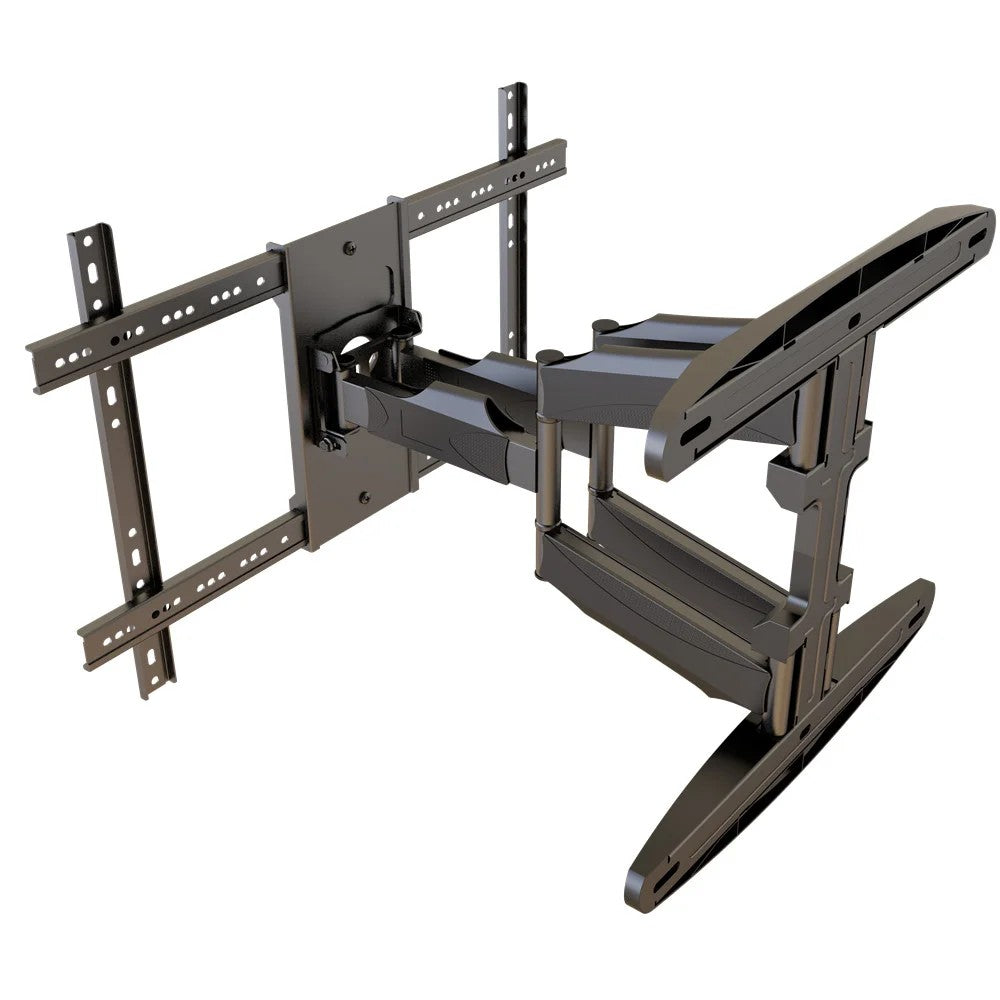
Quick answer: there are four main types of TV wall bracket. A fixed bracket holds the TV flat and close to the wall – best when you always watch from straight ahead. A tilt bracket angles the screen down – best when the TV is mounted high. A swing-out bracket pivots the TV left or right – best for corners and open-plan rooms. A full-motion (articulating) bracket pulls out, swivels and tilts – best when you watch from several spots. Whichever you choose, match the bracket to your TV's VESA pattern and weight.
Buying a TV wall bracket should be simple. Then you open a search page and get hit with "cantilever", "articulating", "low-profile", "VESA 600×400" and a photo of a model who is inexplicably delighted about a piece of steel. Don't worry – by the end of this guide you'll know exactly which type you need, and you may even enjoy the process. (No promises.)
What are the different types of TV wall bracket?
Fixed (flat) TV brackets
A fixed bracket keeps the TV tight to the wall like a framed picture. It's the tidiest look and usually the simplest to install. The catch? Once it's up, it's not going anywhere, so it suits rooms where everyone watches from roughly in front of the screen.
For a clean, quick install, the TMO-WMT-007 slim slide-on wall mount comes with a magnetic spirit level, so the track goes up level first time. The TV slides onto the rail and locks in place – which is why it's popular with installers fitting out hotels, holiday lets and rental properties.

Tilt TV brackets
A tilt bracket lets you angle the screen downwards (and sometimes slightly up). It's the go-to when the TV sits higher than eye level – in a bedroom, say, or above a sideboard – and it can also help cut reflections from windows and ceiling lights. The TMO-WMT-007 above includes an optional supporting bracket that adds a small downward tilt for high installs, and most full-motion brackets tilt too.
Swing-out TV brackets
Swing-out brackets pivot the screen left or right on an arm, so you can point the TV at the sofa in the evening and towards the kitchen while you're cooking. They're great for corners and open-plan living spaces. The TSW800 swing-out TV wall mount and the TSW600SL both suit 32–55 inch screens, while the super-slim 180° swing-out mount sits snugly against the wall when folded back and swings out a full 180 degrees when you need it.

Full-motion (articulating) TV brackets
The Swiss Army knife of TV brackets. A full-motion bracket extends away from the wall on a folding arm, then swivels and tilts in almost any direction. It's ideal for rooms with more than one viewing spot, and it makes reaching the cables round the back far less of a contortionist act.
- PM6 full-motion TV mount: 32–70 inch TVs, up to 45.5 kg, VESA up to 600×400, swivel ±90° and tilt +8°/−5°.
- PNP40 full-motion TV mount: 32–55 inch TVs, up to 31.8 kg, VESA up to 400×400 – a lighter-duty option for bedrooms and smaller lounges.
- STB400 full-motion storage TV mount: arm stretch from 84 to 548 mm with built-in cable management and support for horizontal or vertical installation.
TV wall bracket comparison table
| Bracket type | Best for | Trade-off | Example |
|---|---|---|---|
| Fixed | Straight-on viewing, slimmest look | No adjustment once fitted | TMO-WMT-007 |
| Tilt | TVs mounted above eye level, glare control | Up/down only | TMO-WMT-007 with tilt support |
| Swing-out | Corners, open-plan rooms | Sits a little further from the wall | TSW800 |
| Full-motion | Multiple viewing spots, easy cable access | Bulkier arm, needs a solid fixing | PM6 |
| Heavy-duty | Very large screens, commercial spaces | Needs a strong wall and careful install | 75–120" heavy-duty mount |
How do I know which bracket fits my TV?
Three numbers decide it, and all of them are in your TV's manual or on the manufacturer's website:
- VESA pattern – the spacing of the screw holes on the back of the TV, in millimetres (for example 400×400). The bracket must support it.
- Weight – the TV's weight without its stand. Choose a bracket rated comfortably above it.
- Screen size – stay inside the bracket's recommended size range.
Going really big? Screens from 75 to 120 inches need a dedicated mount like our heavy-duty TV wall mount, which supports up to 100 kg and is designed for conference rooms, auditoriums and serious home cinemas.

What kind of wall do I have (and does it matter)?
Very much so. Solid brick and concrete give the best hold. Timber stud walls need the bracket fixed into the studs. Many UK homes have dot-and-dab plasterboard – plasterboard stuck onto blockwork with blobs of adhesive, leaving a gap behind – which needs fixings designed to bridge that gap. Our Corefix dot-and-dab plasterboard fixings are made for exactly this, and we've got a step-by-step guide on installing a TV mount on dot-and-dab walls. If in doubt, ask a qualified installer.
What if my TV is going above a fireplace?
Fireplaces usually push the TV well above eye level, and no amount of tilting fully fixes that. A pull-down mount brings the screen down to a comfortable height when you're watching and lifts it back up when you're not. See our pull-down and above-fireplace TV mounts.
Finishing touches
Once the TV is up, a soundbar bracket keeps your speaker lined up neatly underneath, and a short 1 m HDMI 2.1 cable saves you from a loop of spare cable dangling behind the screen.
Frequently asked questions
What is the difference between a swing-out and a full-motion TV bracket?
A swing-out bracket mainly pivots the TV left and right on an arm. A full-motion bracket extends further from the wall and adds tilt and swivel, so it offers the most positioning freedom.
Which TV bracket is best for a corner?
A swing-out or full-motion bracket, because the arm lets you pull the TV away from the wall and angle it into the room.
How do I find my TV's VESA size?
Measure the horizontal and vertical distance between the four mounting holes on the back of the TV in millimetres, or check the manual or manufacturer's website.
Can I mount a TV on a plasterboard wall?
Yes, with the right fixings. Stud walls need fixing into the timber studs, and dot-and-dab walls need fixings that bridge the gap to the masonry behind. If you're unsure, use a qualified installer.
Do you supply TV brackets in bulk for hotels and developers?
Yes. We supply single units and trade quantities. Get in touch for a project quote.
The bottom line
Watch from straight ahead? Go fixed. TV mounted high? Add tilt. Corner or open-plan room? Swing-out. Several viewing spots or lots of fiddling with cables? Full-motion. Check your VESA pattern, weight and wall type, and you'll end up with a TV that's exactly where you want it – and a bracket you'll never think about again.